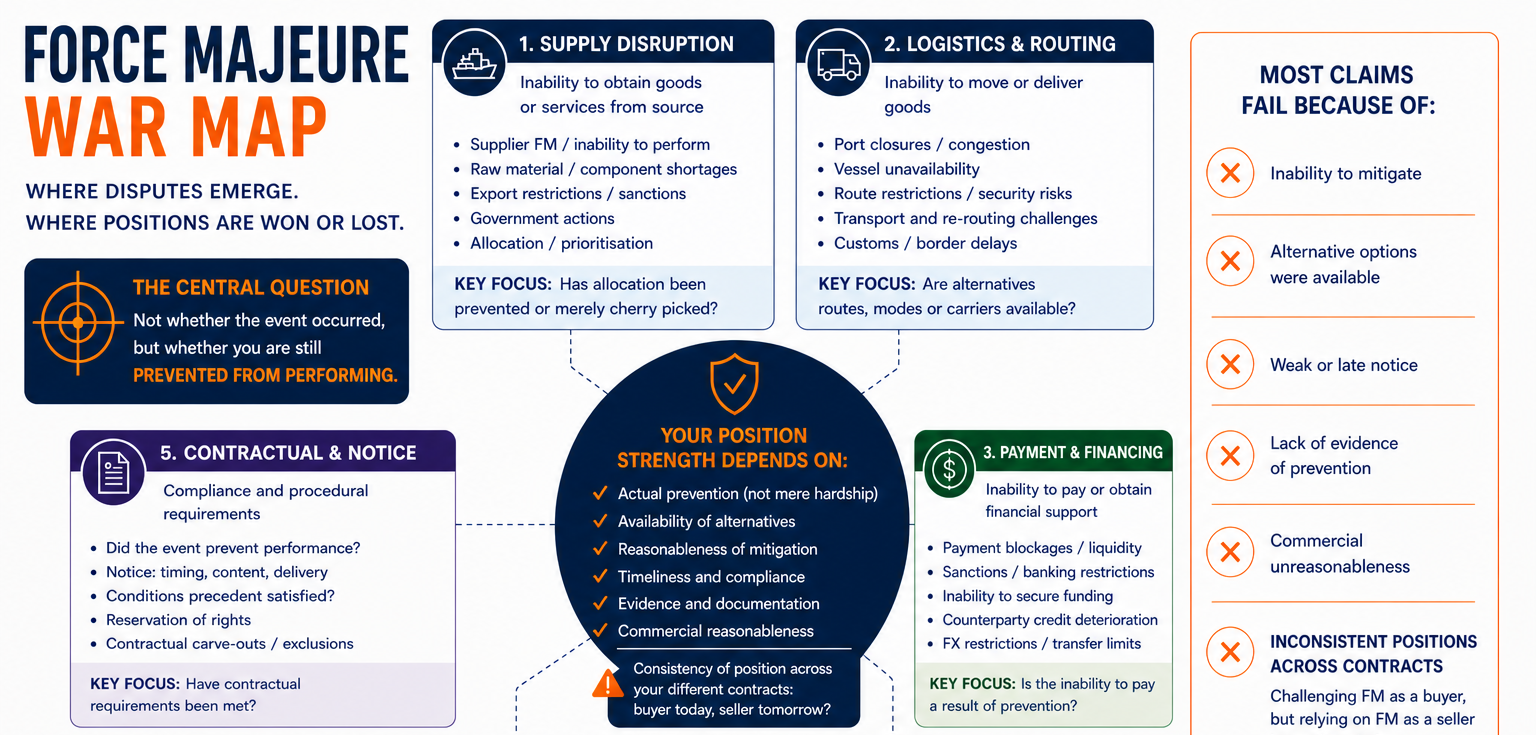
Force majeure notices are flooding commodity trading chains. Amidst the noise and chaos of force majeure declaration, traders and legal teams would benefit from a clear plan on what steps to take if involved in a force majeure declaration.
The key issue is often not whether a disruptive event occurred, but whether it genuinely prevented performance. Rising freight rates, reluctant shipowners, rerouting cots, and payment disruption may create severe commercial pressure without necessarily satisfying the contractual threshold for force majeure.
One of the more significant risks emerging in current disputes is selective cargo allocation — where parties invoke force majeure while continuing to perform for preferred counterparties elsewhere in the chain. Tribunals frequently scrutinise these inconsistencies closely.
Where contracts terminate, the dispute often shifts to hedging exposure. Open derivative positions and hedging losses may be recoverable, but recovery frequently turns on contemporaneous documentation and decisions made in the first 48 hours following disruption.
Click on our downable PDF Force Majeure War Map on the key considerations to navigate a force majeure situation arising from the Iranian conflict.